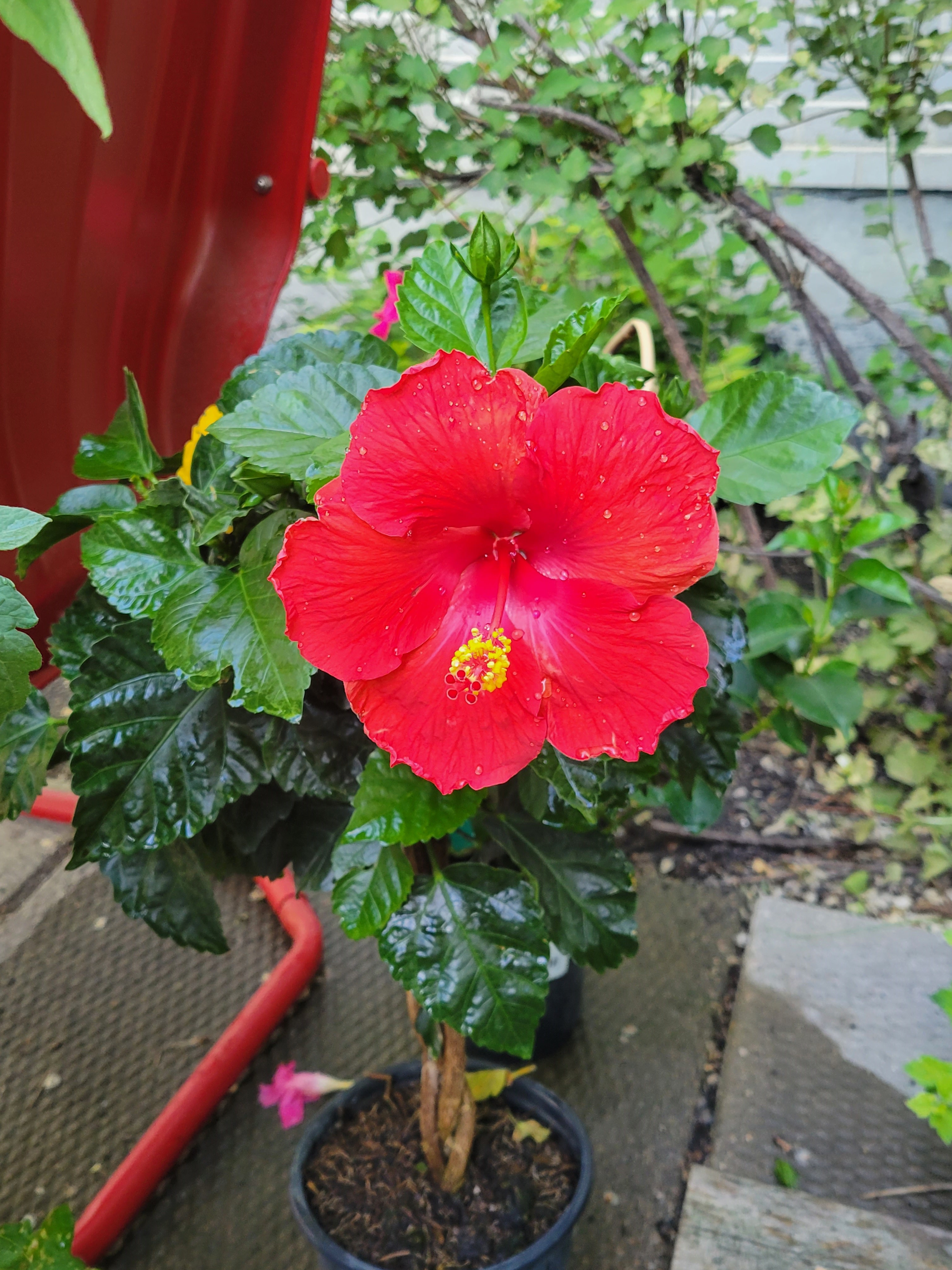
My favourite trolls are Icelandic trolls.
I came to this conclusion after auditing the course “Icelandic Folklore in a European Context” last fall at the University of Manitoba. Before that, I doubt that trolls would have taken much space in my thought process at all.
My prior knowledge of trolls was limited to the story “Three Billy Goats Gruff”, which I have since learned is of Norse origin and to the trolls in a Finnish tale called “The Terrible Ollie” that is a family favourite.
Those trolls were not nice at all. They ate people, although they always tended to have beautiful daughters and to live in luxury.
Before taking the course, the only Icelandic troll I could name would have been Gryla. She is not particularly nice, either, come to think of it.
I learned in the course that trolls live in rocky places and cannot defend themselves against priests. In the story “Blessing of the Cliff”, Bishop Thorlákur the Saint was asked to bless the hills of Látrabjarg in the west of the country. Such a blessing would drive the trolls away.
As the bishop walked along the edge, a troll asked him to please leave one area unblessed.
“Even the wicked need a place to live,” he said. And the bishop complied, warning his parishioners to avoid the unblessed section.
In another story a young man named Ólafur was sent on an errand to the Bishop’s residence to determine the exact date for Christmas. The inhabitants of Ólafur’s community had discovered that their calculation of dates was incorrect, and they did not know the exact date of the annual holiday.
Mission accomplished, Ólafur was on his way home again when he met the female troll Gellivör.
“If the Christ, son of Mary, had done as much for trolls as he did for humans, we would never be so ungrateful as to forget the date of his birth.” Gellivör told him.
Ólafur, who was not (as the story goes) a very gracious young man, promptly turned the troll to stone.
I feel some sympathy for the trolls. I cannot feel indifferent to creatures who have witty and thoughtful quotations such as these to their credit.
Look, too, at how these giant, rock-like creatures have worked their way into Icelandic idiom.
For example: ‘Tröll ganga trautt á grid sín´. Trolls can be trusted to obey a truce. Or this one:
“Oft eru tröllin trú en það ert ekki þú “. Often a troll is faithful, but you are not.
Like Dr. Seuss’s Horton who proudly proclaims, “an elephant’s faithful one hundred per cent”, you can count on an Icelandic troll.
One of the activities that K and I envisioned for our retirement was attending auction sales throughout the province. COVID, of course, has put an end to that, at least temporarily.
Since many auctions are now conducted virtually, however, we have a new hobby – watching prairie auction sales streamed onto our TV. One advantage to this is that we can watch sales from all parts of the country.
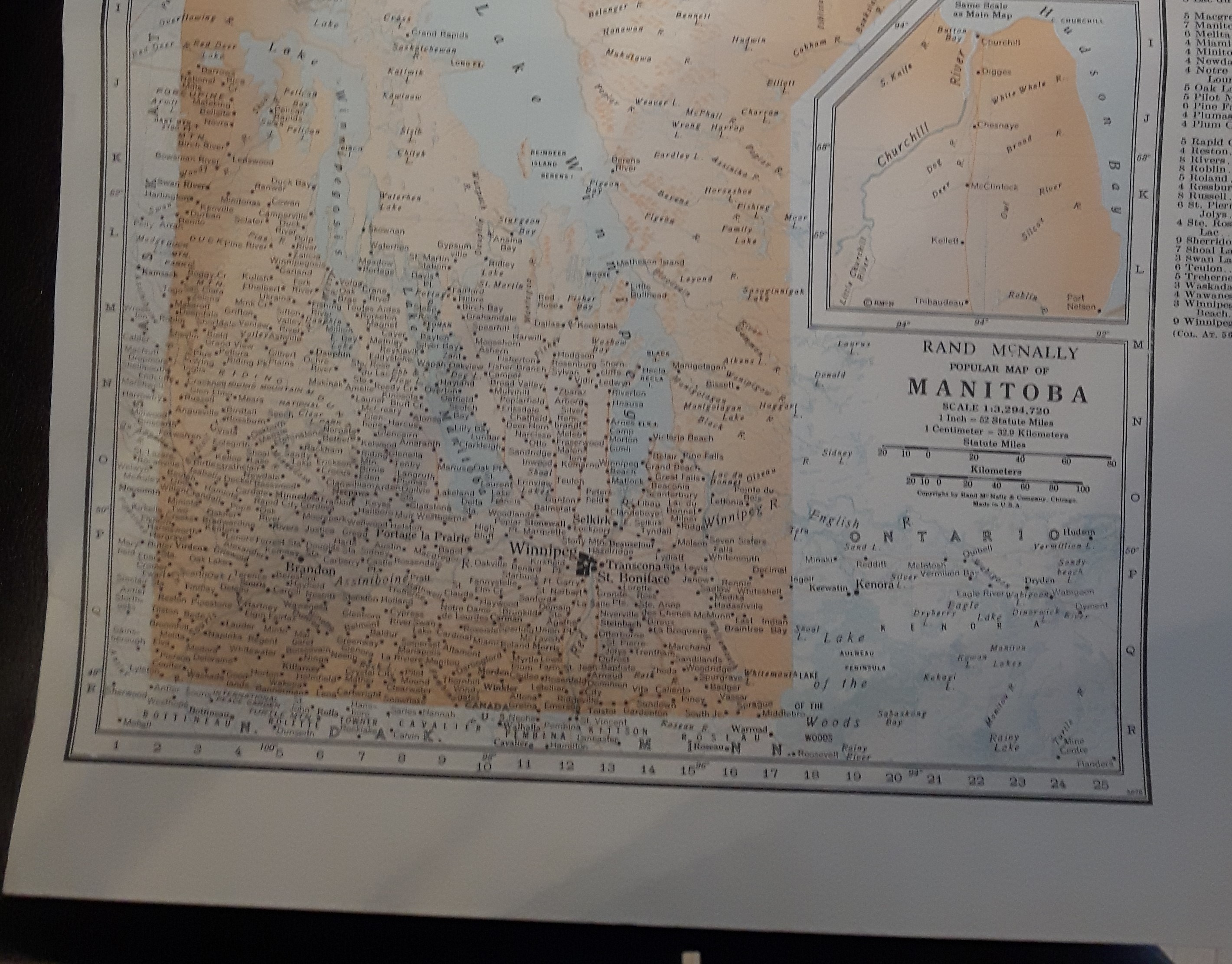
A recent purchase was a Manitoba map, the page taken from a Rand McNally World Atlas and Gazette. We cannot find a date anywhere, but the population of the province is stated as 729,724. The current population is approximately 1.278 million, so the map is about 500,000 people out of date.
Looking at the southern half of the province, I note how densely populated it is with community names filling the map space with black ink.
Some of these names are unknown to me – Decimal, Janow, Ridley, Magnet, Rackham, Crocus, Kulish, Zelena, and Uno, for example. I suddenly want to do some research and find out more.
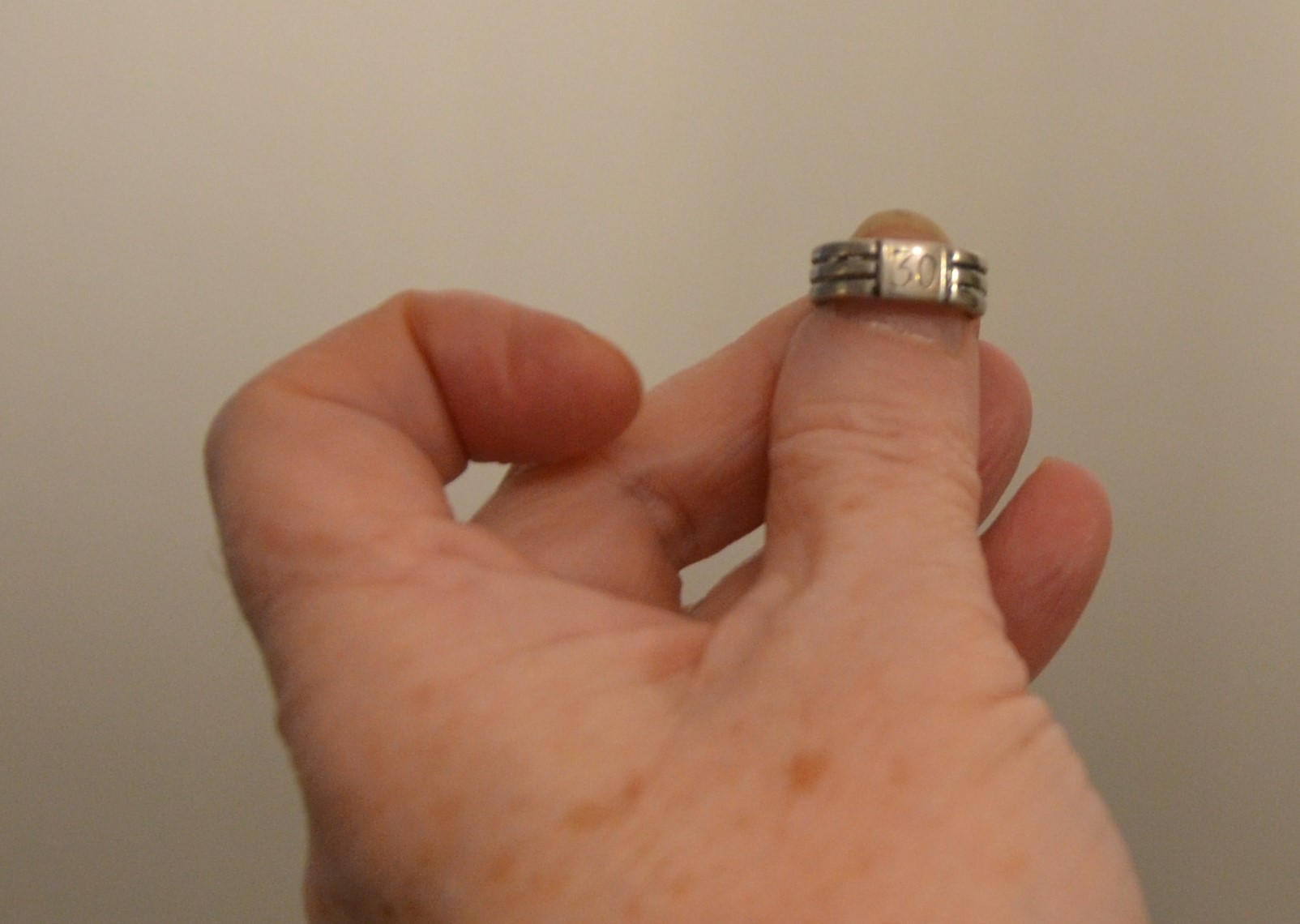
I found this tarnished ring in my jewelry box and searched for something to clean it. Once it had been polished, I could see the engraving on the ring.
It was a delightful surprise. I had forgotten all about the journalism ring I purchased in my final year of university.
I used to wear it as a pinkie ring. Unfortunately, as the photo shows, I can no longer get the ring past the first knuckle of that little finger.
But just seeing the -30- on the ring brought back many memories. North American journalists traditionally finished each story with -30-. It was a sign to editors and printers that they had reached the end of the article.
Why -30- was used is unclear. But it was a source of humour for young journalists because, as they said, ‘everything ends at 30’.
I know better nowadays. At 30, things are just beginning.
-30-
 Rural Routes, Blog Version
Leave a comment