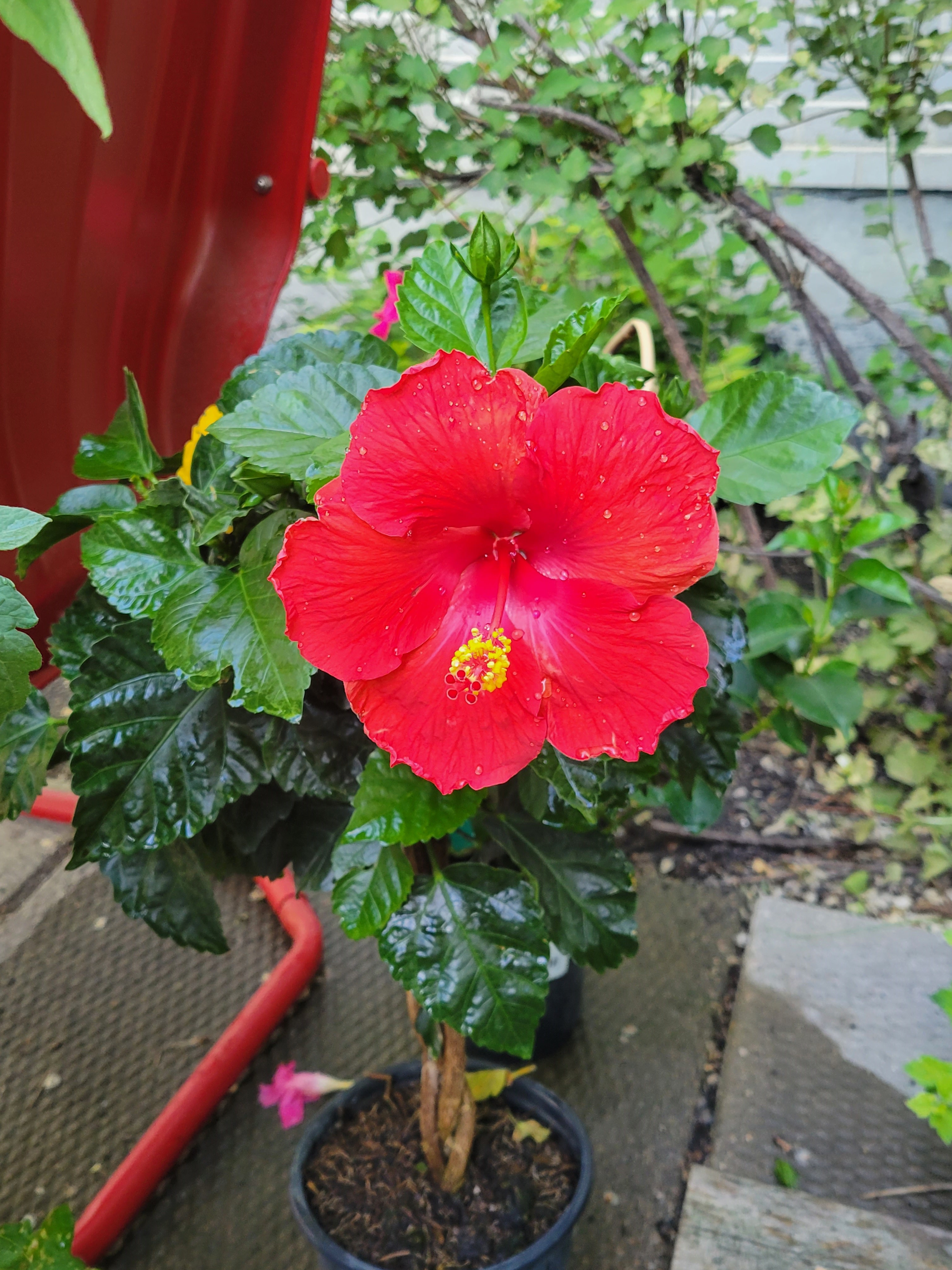
Geese in pairs –
Do I dare
Disturb them?
Perhaps not.
Many of the Canada Geese that I see on my daily walks with the dog these days are in pairs. They are doing their spring thing.
After watching them for several days, I decided that the females have thinner necks than the males. Then I went online to see if I was right and apparently I was. A smaller neck circumference is one of the features that distinguishes a female from a male Canada goose. Who knew?
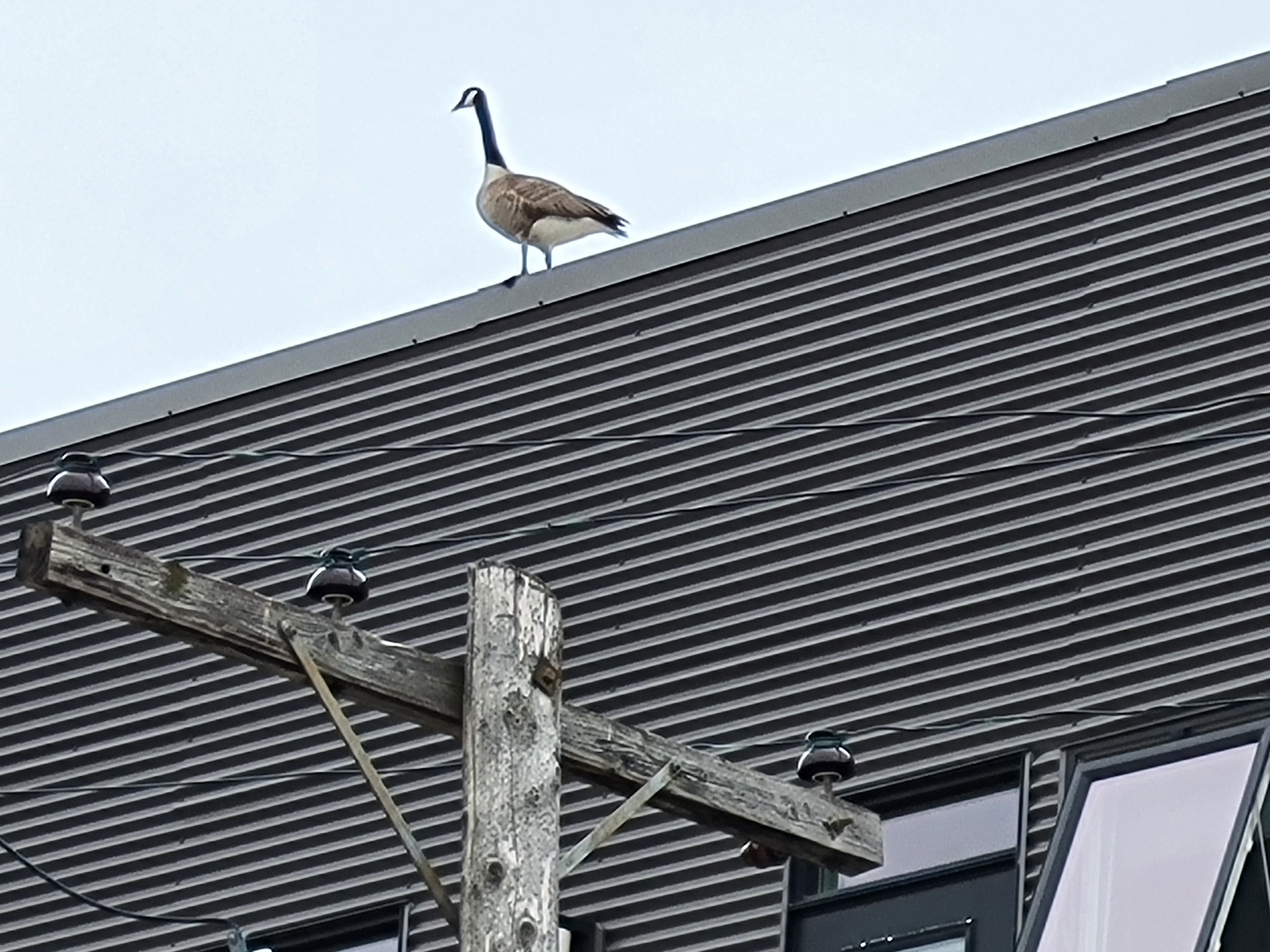
Almost every morning a lone goose appears regularly on the roof of the condo development across the back lane. Since it is alone, I have no way of comparing neck sizes, but it is loud and since male geese have a louder honk than female ones, I am guessing that this is a male.
His honk could be translated as “Where are you, woman?” Or perhaps “What the heck are you people doing?”
My own rant is quieter.
Twice during my working life, I participated in an exercise designed to illustrate cultural differences around family and community.
Indigenous cultures around the world use a circular model.
In the exercise, participants were divided into four groups: children, elders, women and men.
The children went into the middle of the circle, with the elders surrounding and facing them. Women came next, facing into the circle. Men stood on the outer edges, positioned so that they could see both inside and outside the circle.
Next we were aligned in the more linear model adopted over time by many Western cultures -men first, followed by women, then elders, then children. Everyone faced forward.
Now came the question:
Who is watching the children?
At the beginning of the exercise, there was much laughter and conversation. By the end, the room was silent. We had been given something to think about.
I have often heard it said that our society ignores the very young and the very old. They seem to have no voice.
A baby has a loud voice, of course, but adults have to learn what each cry means. Similarly, we have to learn to understand the language of the elderly, whose voices may be garbled by the effects of declining health.
If I’m being cynical, I might say that we don’t put as much emphasis on the young and the old because they are not “productive members of society”. Infants and toddlers do not go out to work. Senior citizens have retired from the work force. They do not generate wages or pay taxes.
I think that is a narrow definition of productivity, reducing it to dollars and cents. Dollars and cents are easy to count, however.
What seniors certainly do have in abundance is the collective wisdom and experience of many.
(Note that I say ‘collective’. I am a senior now and I always thought I would be a good deal smarter by now than I am. What used to be clear cut is now gray (and I’m not just talking about the colour of my hair). What used to be obvious is now blurred (not talking about my ripening cataracts, either.) So I’m not sure how much wisdom I add to the total, but the total is vast without my contributions).
The young are our future. They are huge potential in small packages.
If a society looks to the future – but does not consider the wisdom and experience of its past, nor the potential in its youngest citizens – what does that say about us?
My rant has ended.
-30-
 Rural Routes, Blog Version
Leave a comment