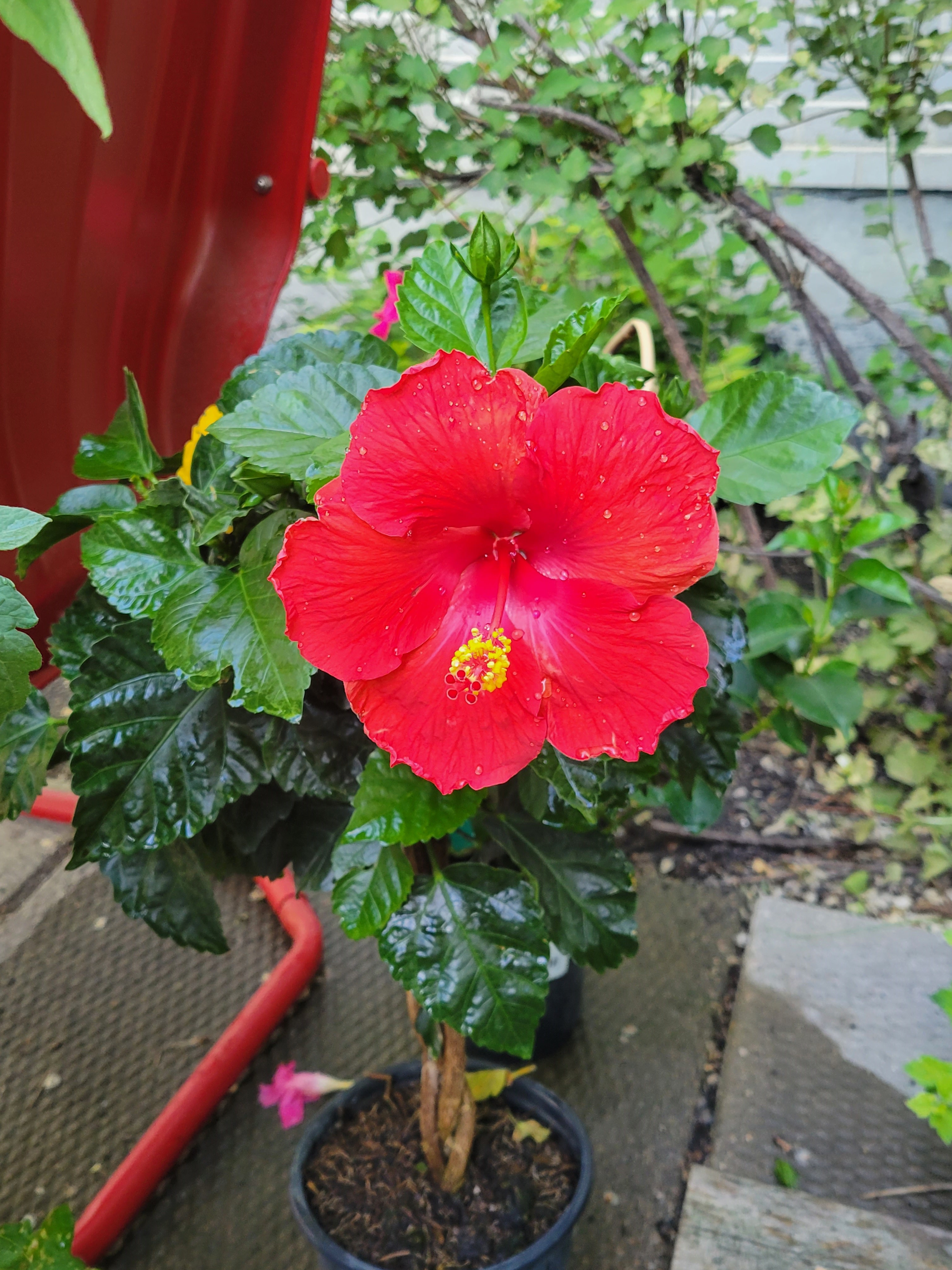
MY BEST TO YOU
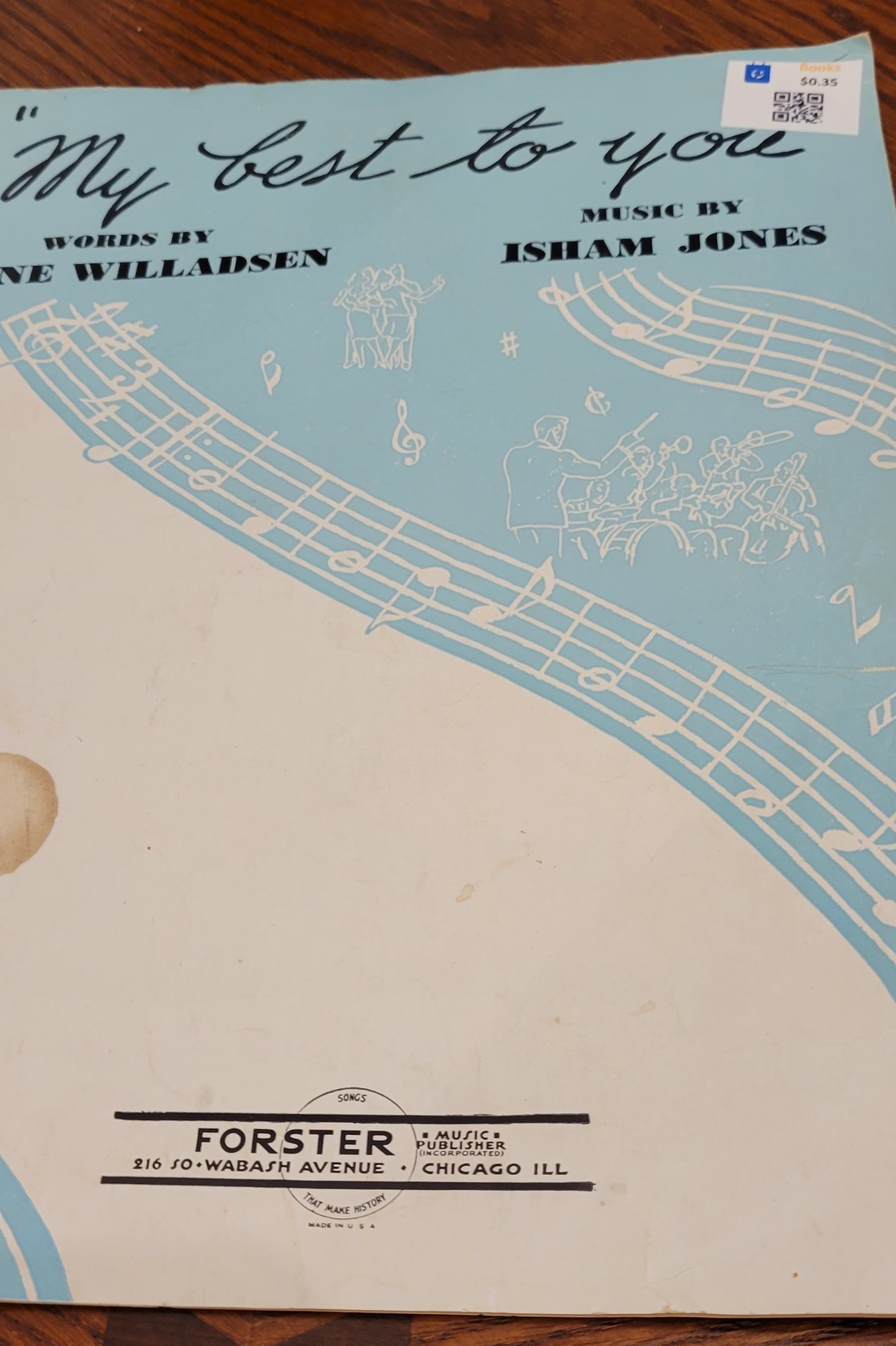
A recent visit to a thrift store resulted in this find: sheet music for the 1942 song “My Best to You.”
In the small rural community where I lived for most of my life, this song was a constant at every community bridal shower. After the gifts had been opened and the bride-to-be stood up to give her thanks, the opening chords of the song would sound, the guests would stand and sing this song.
My best to you; may your dreams come true.
May old father time never be unkind.
And through the years save your smiles and tear; they are souvenirs;
They’ll make music in your heart.
So here’s to you; may your skies be blue
And your love blest; that’s my best to you.
It was sung at my shower; it was sung at the showers of aunts, sisters, cousins, nieces, friends, and their daughters. At some point, I became one of the pianists who played the song while others sang. I never owned a copy of the sheet music; I borrowed the music from an aunt and (may the copyright police not be paying attention), photocopied it and attached it to cardboard for stability.
The custom continued in more recent years, although it became necessary to provide the words on little slips of paper which could then be retrieved and put away until the next time they were needed.
Although chances are slim that I will ever again need to play the song, I bought the sheet music I found in the thrift store. It cost a whole 35 cents.
SALKA VALKA
I just finished reading the novel Salka Valka by the Nobel prize winner Halldor Laxness. It was a selection of my book club several months ago, but I only got around to reading it now.
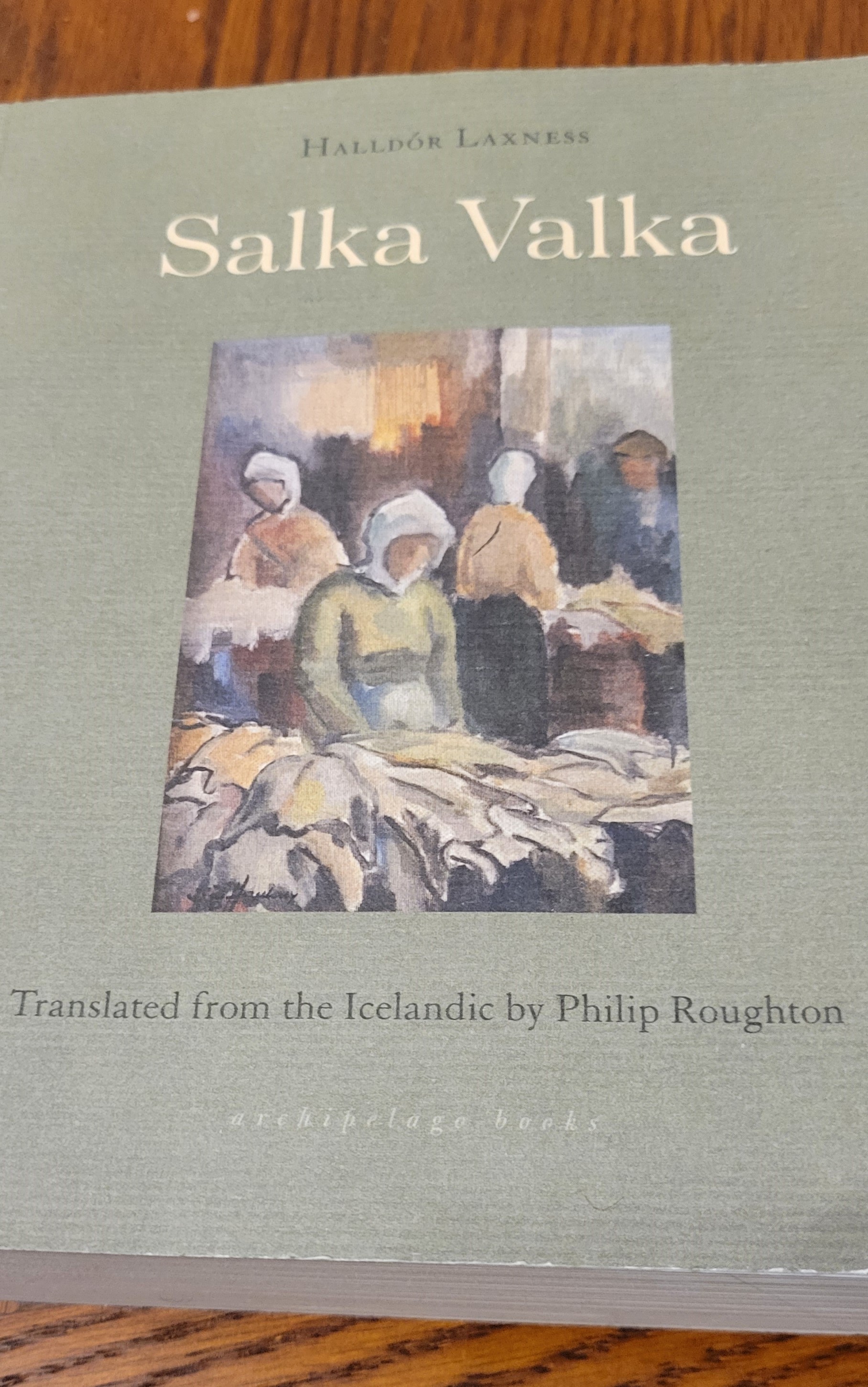
The novel was first published in Icelandic in two parts, the first part in 1931, the second a year later. This English translation was published in 2022.
Salka Valka is the story of a young Icelandic girl who lives in the remote Icelandic village of Oseyri. It is a coming of age story and a love story, but it is much more than that, largely due to Laxness’ ability with words.
It is a bleak story, both in plot and setting, although the author’s language lifts it out of despair.
At one point towards the end of the book, Salka and the man she loves survey the valley where he dreams of establishing a school for the community’s children.
“And let’s not forget the playgrounds. Teaching children to play is an extremely important part of scientific childrearing,’ he says.
In my working life, the value of children’s play was often highlighted. I find it interesting that almost 100 years ago in another country far away, that value was touted as being new and innovative and a symbol of social progress.
THE DRINKER
Speaking of bleak reading, it would be hard to get much bleaker than “The Drinker” by German author Hans Fallada.
The novel is said to be autobiographical and was written over the course of two weeks while Fallada was institutionalized in wartime Germany. Fallada’s stay was four months in length, while his protagonist Erwin Sommers is sentenced to a far lengthier stay.
Fallada was an internationally-known author prior to World War 2 and one of his novels was adapted to a Hollywood movie. Unlike other German authors, he remained in the country during the war, writing coded novels that would be deciphered years later. He died of a morphine overdose in 1947. Months later The Drinker first appeared in print.
It is astonishing to me that he wrote the book in two weeks. What is even more astonishing is that the first draft received no corrections or edits and was published exactly the way he wrote it. It is a testament to his talent, but also invites comparisons to modern publishing where editing assumes a bigger role.
Now I feel the need to read something lighter.
DOODLEART
Tucked away in a back corner of my office closet is a cardboard tube that contains a completed DoodleArt from the 1970s.
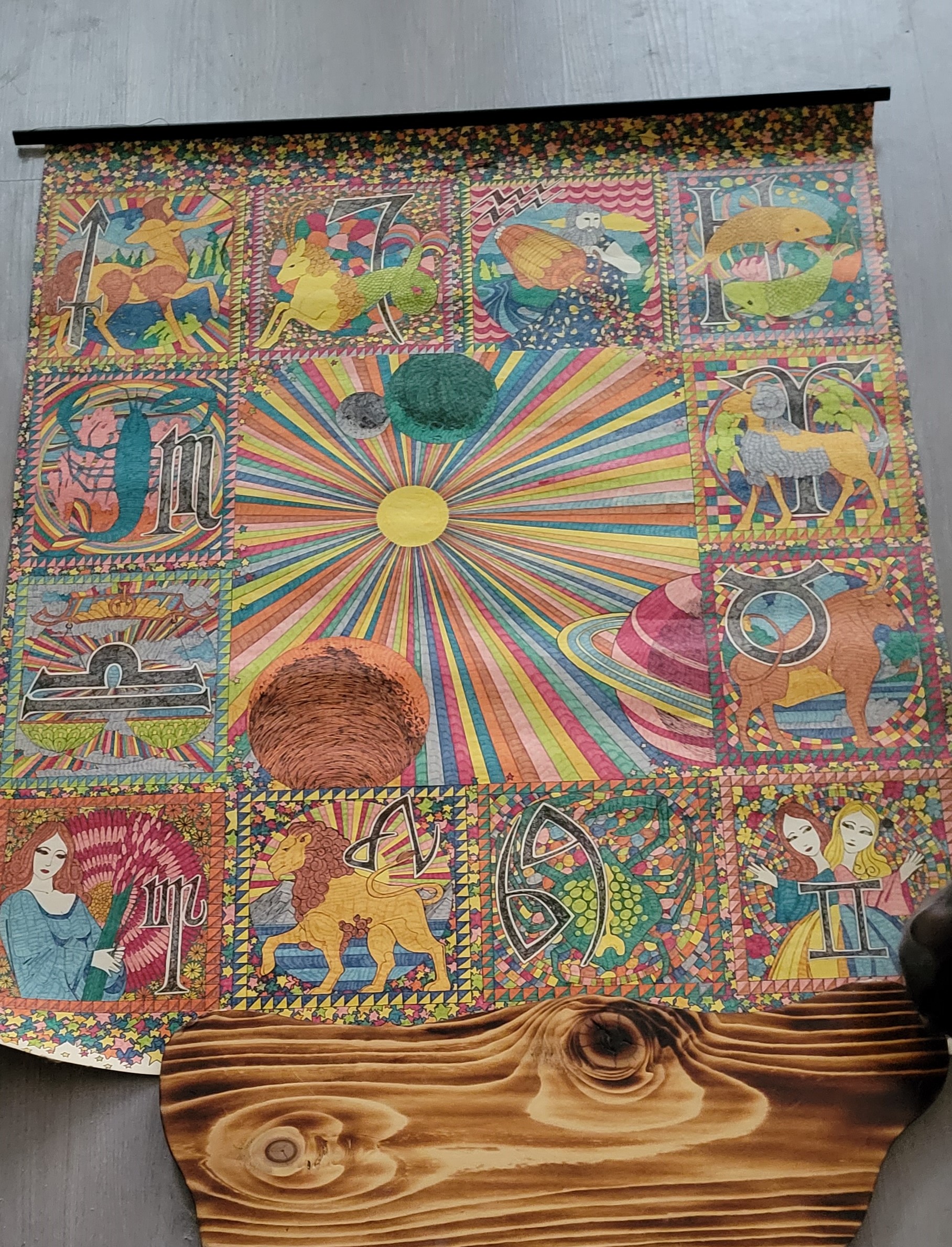
I was living in Toronto when I purchased it for $2.99, a not insignificant sum when you consider that my weekly spending budget at the time was $15.
The packaging promised 60+ hours of doodling fun and in the following weeks I made a start on my poster of astrological signs. But I had not finished it – I was nowhere near to finishing it – when I graduated university and headed back to Manitoba. My Doodle Art came with me.
Over the next year or so, I was able to complete the poster. It hung on the living room wall of my basement apartment.
When I moved, the poster moved with me, although I don’t think it ever hung on a wall again. It was just there, in a cardboard tube, in a closet.
When we retired and moved to the city, I took a long hard look at that tube. Could I see any future use for it? No. Did I know anyone who might find it of value? No. Could I put it in the garbage pile? No. The tube came with me to Winnipeg.
My astrology sign is Taurus the bull. Taureans are attached to their ‘things’, I have read, and perhaps my attachment to the poster is proof of that. Take a picture of something you’d hate to lose but never use and let the photograph provide the memories instead of the larger items. I have the photo now. Perhaps I shall be able to get rid of the original. Perhaps.
Perhaps not.
Perhaps.
Done.
It only hurts for a minute or two.
-30-
 Rural Routes, Blog Version
Leave a comment